
Industry — Chemicals & hazardous substances

GHS labels that meet the BS5609 standard. Without an outside printer.

In most industries a label is a piece of marketing. In the chemicals industry it is a piece of regulation: it carries the pictograms and hazard statements an inspector or a haulier goes by, and it has to stay legible after months in the sun, in a warehouse full of solvents or on a sea container. That places demands on ink, material and print width that an average label printer cannot meet.

On request we print a sample of your own label beforehand.

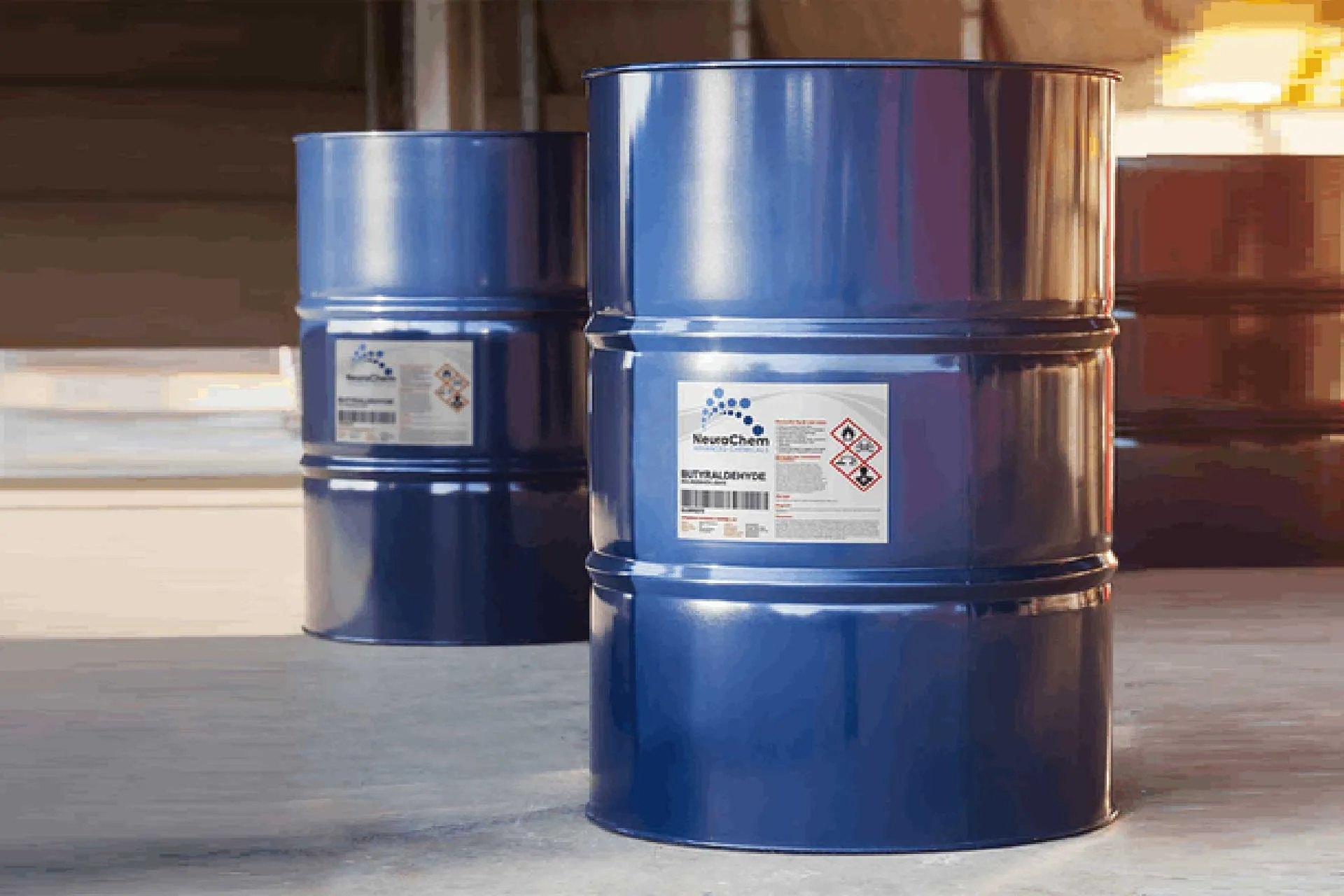
Drums with GHS labels in a chemical warehouse
  • BS5609The sea freight standard
  • 296 mmMax. print width
  • Pigment inkWater, UV and chemicals
  • No minimum runFifteen labels is fine too

Why chemicals are different

A hazard label has more to survive.

Speed and colour quality are welcome, but the first question is a different one: will this label hold up in the conditions it ends up in, and does it meet the standard? Four things decide that answer.

  • Resistant to what is inside

    A label on a drum will sooner or later come into contact with the contents. Dye ink dissolves in water and lifts off; pigment ink consists of solid colour particles that stay on the material and can take water, alcohol, acetone and other aggressive substances.

  • UV and outdoor storage

    Drums and containers are rarely kept indoors. Under UV, dye ink fades within a single season, while pigment ink holds up. The material has to follow suit: paper cannot manage it, synthetic media such as PP and PE can.

  • Pictograms take up room

    A GHS label carries pictograms that have to be recognisable from a distance, plus signal words, hazard statements, precautionary statements and supplier information — often in two or three languages. Where a product label gets by on ten centimetres, a hazard label starts at A5 and runs up to A4 or A3.

  • The CLP classification changes

    An adjusted formulation, a new CLP classification or an extra hazard statement happens more often than businesses expect. Anyone who ordered a year of stock from a printing house can throw it away at that point. Anyone who prints in house adjusts the file and prints the new version from the next batch onwards.

Our recommendation

For the chemicals industry we recommend one machine.

Not because it is the most expensive, but because it is the only one in our range that combines the three things a hazard label needs: the standard, the ink and the width.

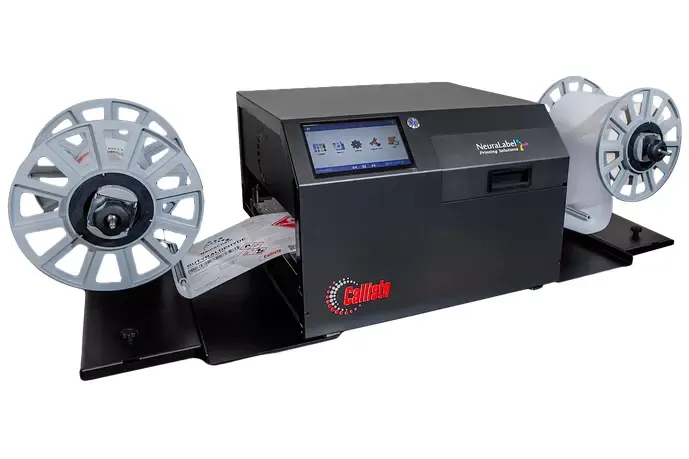
NeuraLabel Callisto industrial label printer

NeuraLabel

NeuraLabel Callisto

The Callisto is the only model in our range that prints BS5609-compliant labels and at the same time handles the widest format. Water-based pigment ink that resists salt water, UV and chemicals, labels from 25 mm up to 296 mm wide on the same machine, and a pace of up to 27 metres per minute for the days when a complete delivery has to be labelled in one go.

  • BS5609-compliant
  • Pigment ink (CMYK)
  • Up to 296 mm wide
  • Up to 27 m/min

BS5609 requires certified label material — we supply that with the machine.

In practice

Where these labels end up.

Four situations we come across most often in the chemicals industry — and which can all be printed on one machine.

  1. Drums and IBC containers

    Hazard labels in A4 or A3 format, with pictograms that stay legible from a distance. Up to 296 mm wide comes off the same machine as all your other labels.

  2. Small packaging from five litres upwards

    Bottles and jerrycans carry the same hazard label in miniature. You print those on the same machine too — no second machine for the narrow work, no outside printer for the wide.

  3. Transport and sea freight labels

    If the consignment travels by sea, BS5609 is the bar: ninety days of immersion in seawater, UV exposure and an abrasion test — and after that the label still has to be legible.

  4. Changing language versions per batch

    If you supply Belgium, the Netherlands and France, you need several language versions per product. Anyone printing in house prints the language that batch needs, at the moment that batch is ready.

Frequently asked questions

What chemicals businesses ask us.

Is your question not here? Feel free to ask —you will get a personal answer

Which ink resists chemicals and UV?

Pigment ink. Dye ink dissolves in water and fades under UV; with pigment ink, solid colour particles stay on the surface. The NeuraLabel Callisto prints exclusively with water-based pigment ink, resistant to water, alcohol, acetone and other aggressive substances. Pigment is slower and slightly more expensive per label, but it is the only type of ink that lasts for years outdoors.

What is the BS5609 standard and why does it matter?

BS5609 is the standard for labels on sea freight carrying hazardous substances. A label has to survive ninety days of immersion in seawater and still be legible afterwards, as well as resist UV and abrasion. For GHS labelling in the chemicals industry that is in practice the bar to clear — even if your goods never travel by sea.

Can I print GHS pictograms on my labels myself?

Yes. The Callisto prints in four colours at up to 1200 dpi, which keeps warning pictograms and fine lines sharp and colour areas even — on synthetic material too. You do need three things at once: pigment ink, certified label material and a machine with enough print width.

How wide does a hazard label need to be?

That depends on the packaging and on the number of languages on the label. In practice a hazard label starts at A5 and runs up to A4 or A3, certainly on drums and IBC containers. Most industrial label printers stop at around 216 mm; the Callisto prints up to 296 mm and handles media rolls up to 305 mm.

Is certified label material really necessary?

Yes. The ink may meet the standard, but if the material underneath lifts off, the label will still not hold up. That is why we supply BS5609-certified material with the machine, in the widths and shapes your packaging calls for.

Advice

Show us your label.

Send us your current label with the size, the material and the packaging it goes on. You will get a personal answer with a concrete proposal — and on request we print a sample beforehand, so you have the result in your hands before you decide.

Price on request — matched to your volume, your labels and the accessories.